Masonry Projects
Tuckpointing, crown repair, brick replacement, and full chimney rebuilds.
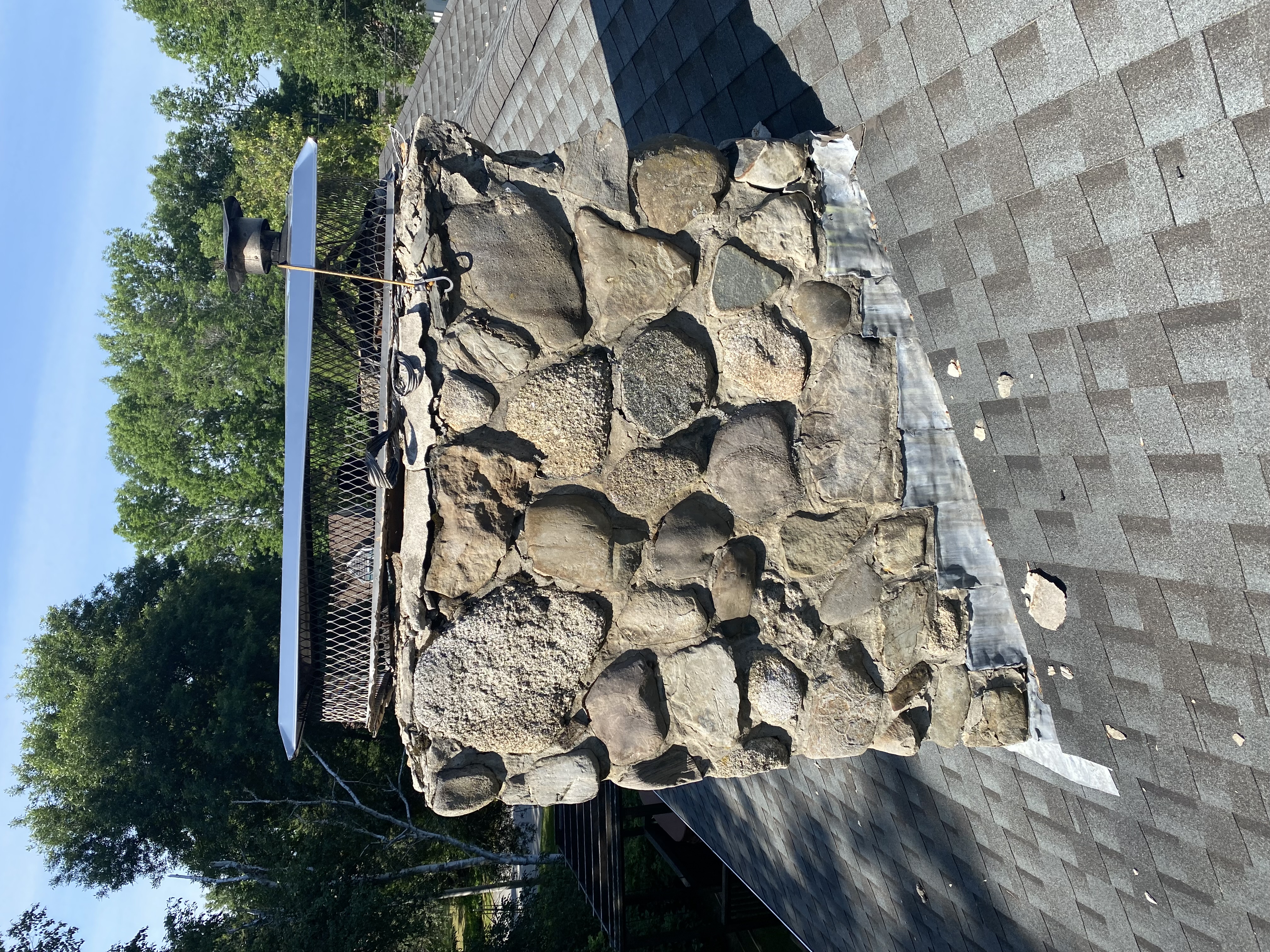
Bangor Fieldstone Repoint
Water intrusion from a failed masonry wash allowed the mortar to deteriorate. Multiple masons were contacted but were unwilling to repoint — they would only rebuild with brick. Our response to the customer: "We'll make it happen." The mortar around the stones was chiseled away and the loose stones removed — between 25–27 of them. The stones and their pockets were scored to create extra bonding surfaces, and each stone was relayed with a specialty veneer mortar. Once the stones were secured, the joints were pointed and a new wash was applied. Tears in the flashing resulted in a FlashSeal application. A divider was constructed between the two new propane stove liners with a top-mount cap. A spray-on waterproofing solution was applied, creating a waterproof but breathable coating to finish it off.
View photos →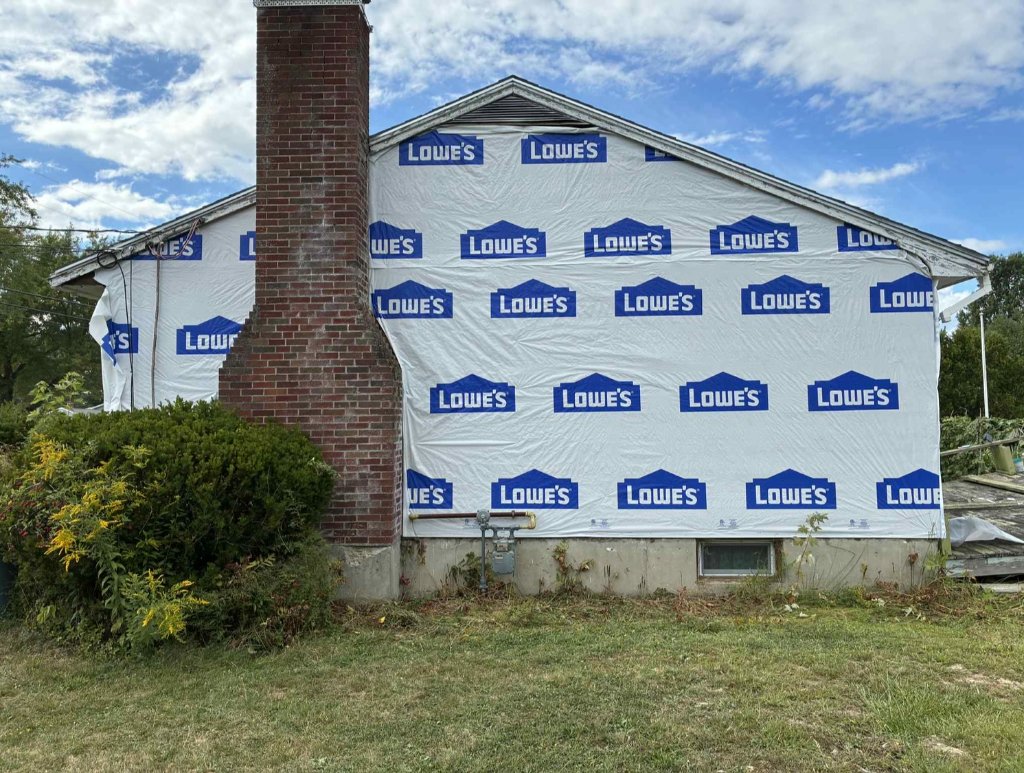
Brewer Repoint
Full repoint of a tall exterior chimney in Brewer — deteriorated mortar joints ground out and repacked throughout.
View photos →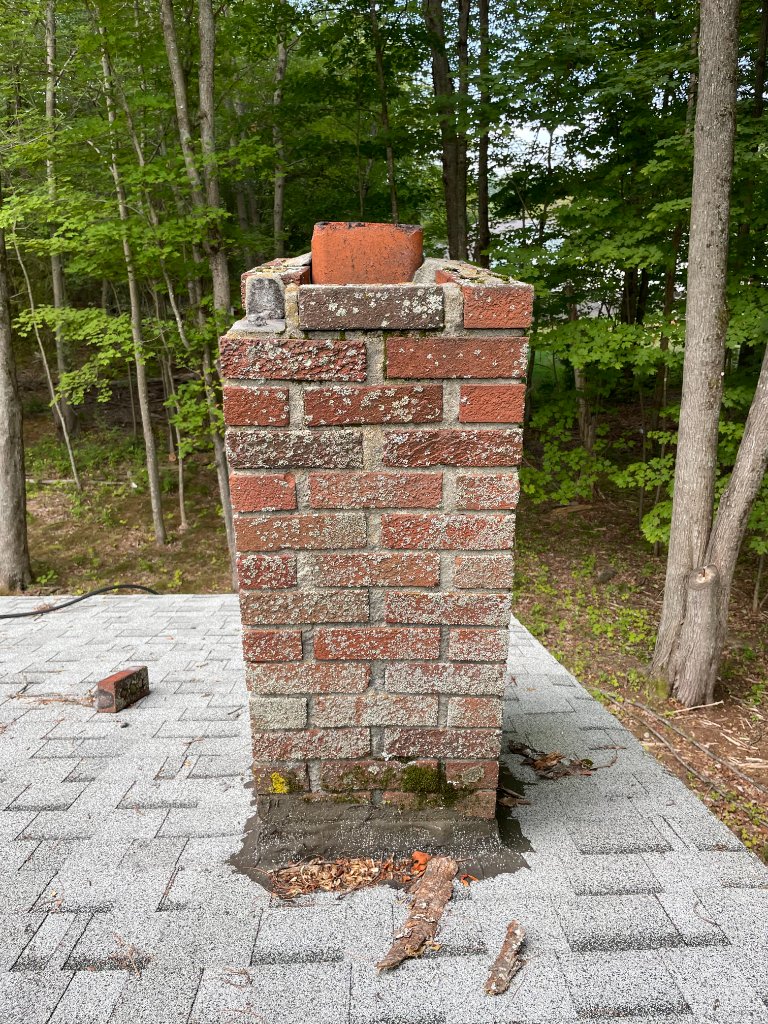
Orono Repoint
Complete repoint and restoration of a weathered chimney in Orono — new mortar, crown, cap, and flashing.
View photos →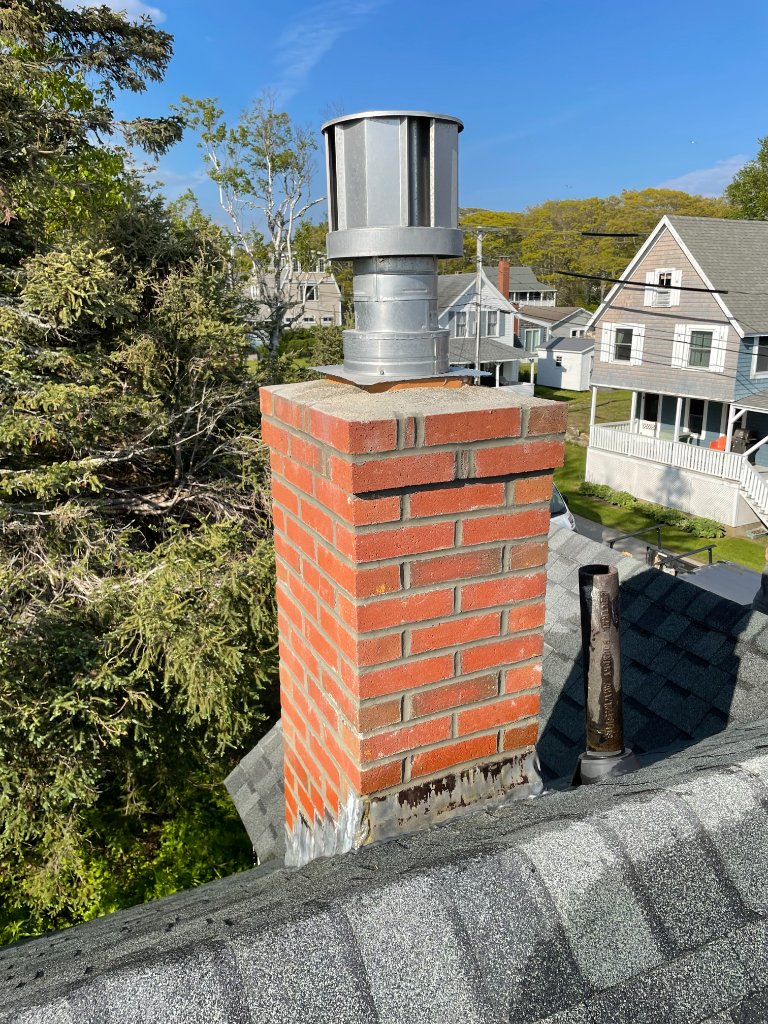
Chimney Repoint
This customer noticed water damage in their cottage but flashing was complete and intact. The mortar joints had deteriorated and were now porous, allowing water to soak through the masonry and into the wood members.
View photos →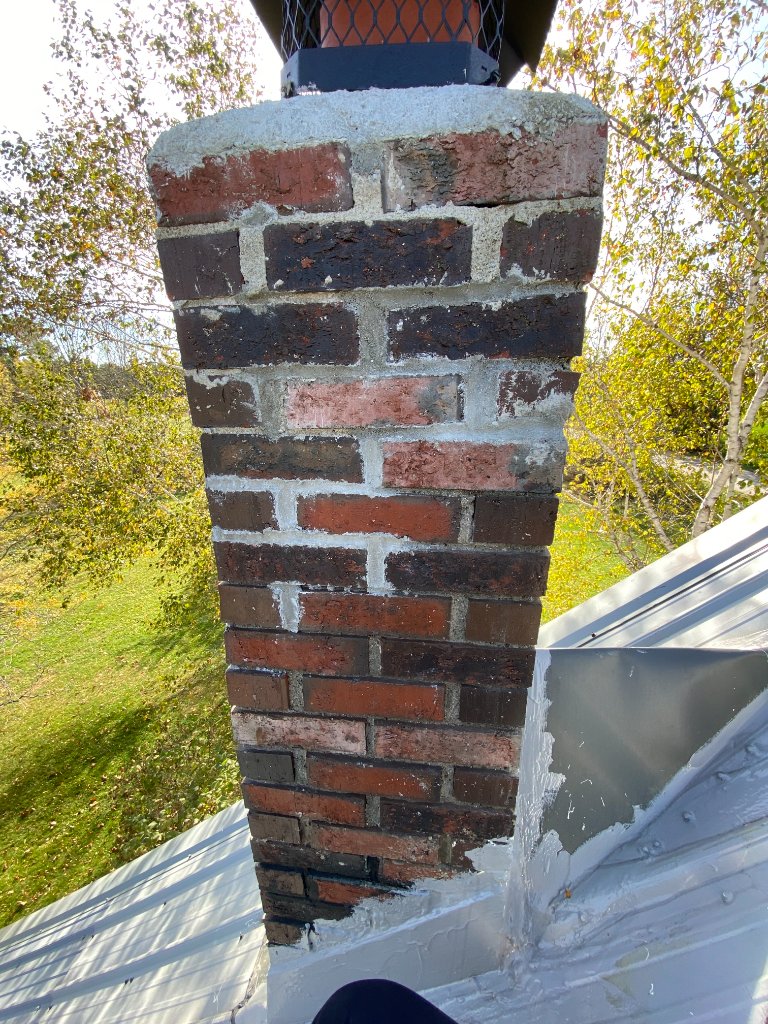
Corrina Repoint
Leaking was present after recent sealing of flashing from third party. The mortar joints were present but allowing water intrusion. Bangor Chimney utilized penetration free roof scaffolding to create a safe working platform without compromising the roofs waterproof layers. The joints were ground away and refilled, all masonry projects use a waterproofing additive called a plasticizer to enhance its waterproofing capabilities and extend its lifespan.
View photos →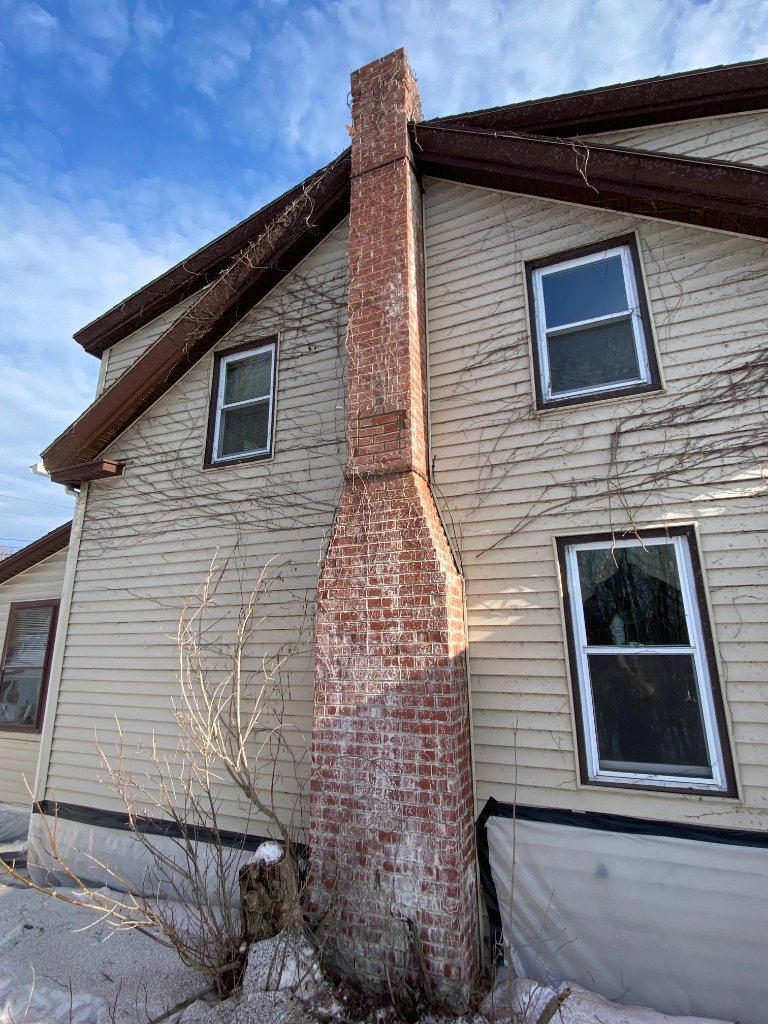
Bangor Wythe Collapse
Bangor Chimney received a no heat call after a chimney was found to be plugged. It was determined that the chimney's wythe — a row of brick — had collapsed after years of deterioration, blocking the flue with brick, mortar, sand, and ice from condensation. The blockage was 16"–18" thick and could not be cleared from below. It was measured and accessed by cutting through the exterior of the chimney, then cleared, patched, and the area cleaned.
View photos →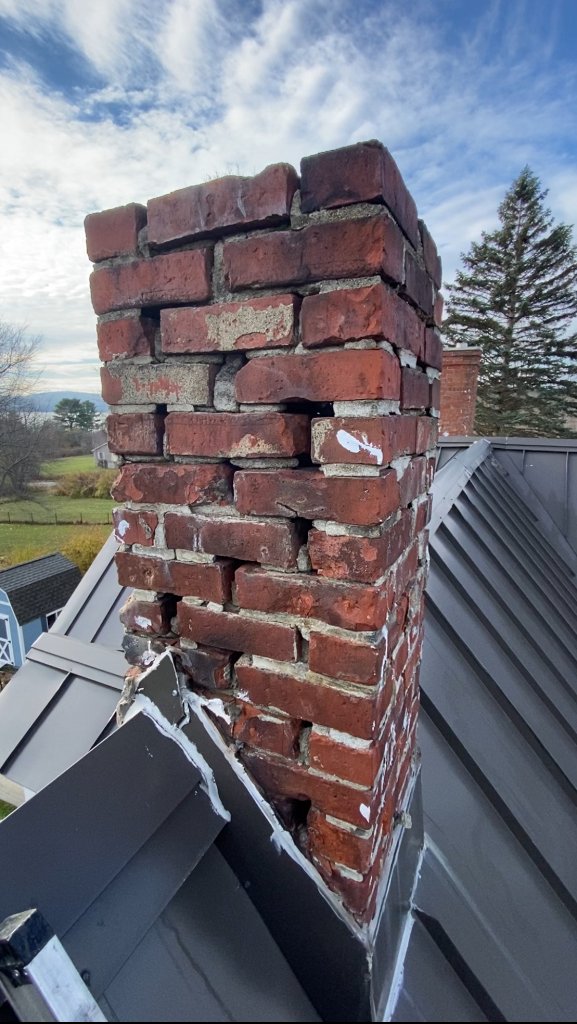
Winterport Rebuild
This chimney needed to be rebuilt due to an oil-fired appliance venting into an unlined chimney. The homeowners were experiencing leaking that is now resolved after rebuilding and installing a stainless-steel liner.
View photos →
